
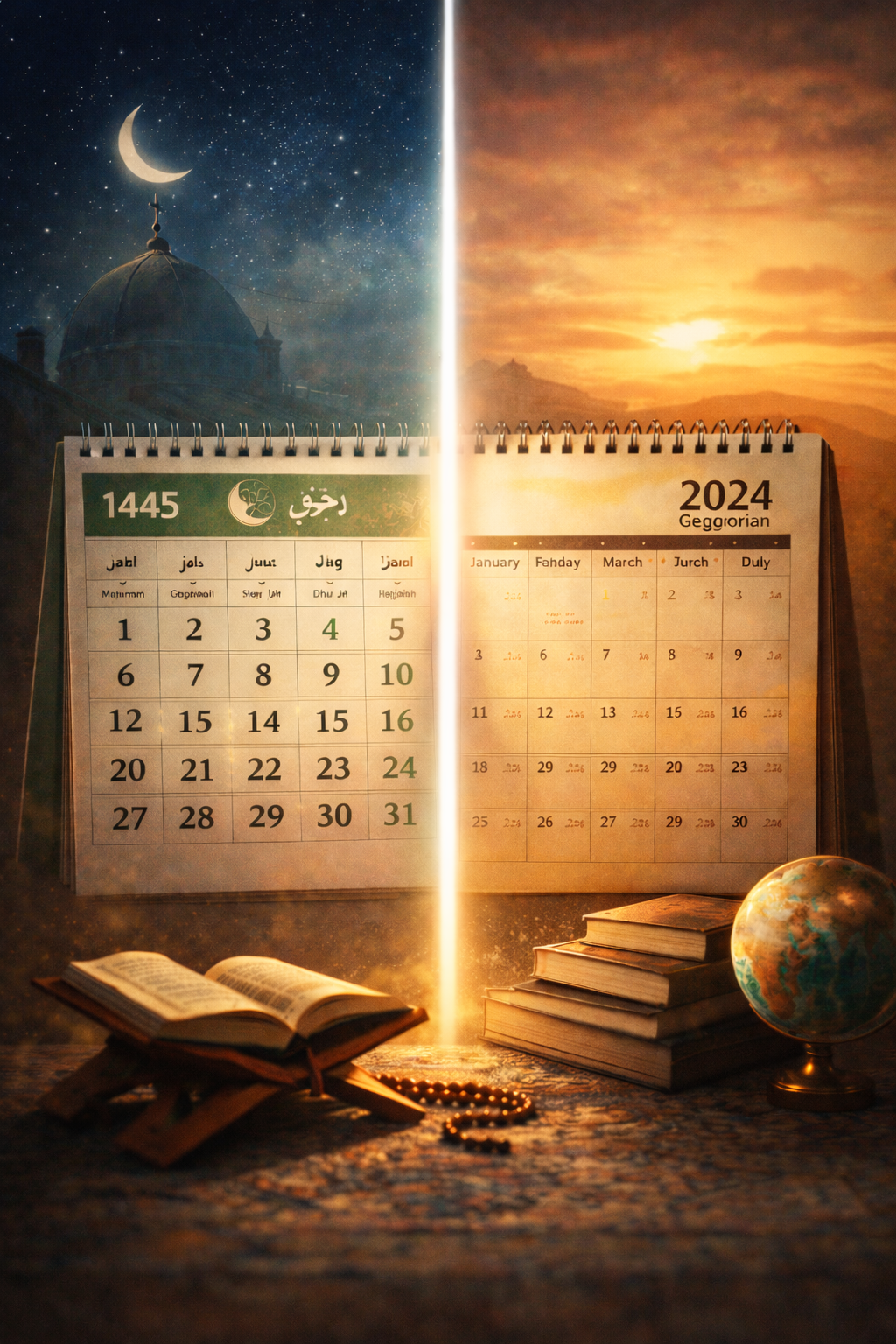
Why Do We Live Between Two Calendars?
Understanding Hijri and Gregorian Time in Everyday Life
In daily life, most people move seamlessly between two different systems of time without thinking much about it. Work schedules, appointments, and deadlines are organized using the Gregorian calendar, while religious observances and important spiritual moments follow the Hijri calendar.
This overlap feels natural, yet it raises a quiet and important question:
How does living between two calendars shape our experience of time?
Two Calendars, Two Ways of Measuring Time
The Gregorian calendar is based on the solar cycle, which keeps its months relatively stable within the seasons. This consistency makes it practical for long-term planning and daily organization.
The Hijri calendar follows the lunar cycle. As a result, its year is shorter, and its months move through different seasons over time. This difference changes not only how dates are calculated, but also how time is felt across the year.
Why Dates Sometimes Feel Confusing
Many people experience uncertainty when:
- converting between Hijri and Gregorian dates
- anticipating the start of a Hijri month
- planning around religious occasions
This confusion does not come from complexity, but from habit. The calendar used most frequently becomes familiar, while the other feels occasional and less intuitive.
A Calendar Is More Than Numbers
Calendars influence more than schedules. They shape:
- anticipation and preparation
- how we mentally mark the passing of months
- our awareness of significant periods
When a Hijri month carries special meaning, awareness often begins before it arrives. This anticipation subtly affects how time is experienced, even before any event begins.
How Calendars Shape Religious Practice
Many acts of worship are directly linked to time.
Because Hijri months shift through the seasons, religious practices are never tied to a single climate or routine. Each year brings a slightly different experience.
This movement prevents worship from becoming mechanical. Instead, it renews awareness and keeps meaning connected to time rather than habit.
Is Living Between Two Calendars a Problem?
Not necessarily.
In fact, it can be an advantage.
The Gregorian calendar supports structure, planning, and consistency.
The Hijri calendar adds depth, meaning, and seasonal awareness.
Together, they create a more balanced relationship with time.